


19
2026
-
05
Tungsten Carbide vs. Hardened Steel Nozzles: Which Defeats Wear Best?
In high-wear industrial applications and advanced manufacturing, the nozzle is often the unsung hero. Whether it is dispensing abrasive slurries, handling high-pressure sandblasting, or extruding composite filaments like carbon fiber in 3D printing, the nozzle bears the brunt of relentless friction and erosion.
When standard brass or stainless steel components fail to keep up, engineers and operations managers typically find themselves choosing between two heavyweight contenders: Hardened Steel and Tungsten Carbide.
Both materials promise superior longevity, but which one truly defeats wear best? Let’s dive into the technical details, material properties, and operational trade-offs to help you make the right choice for your application.
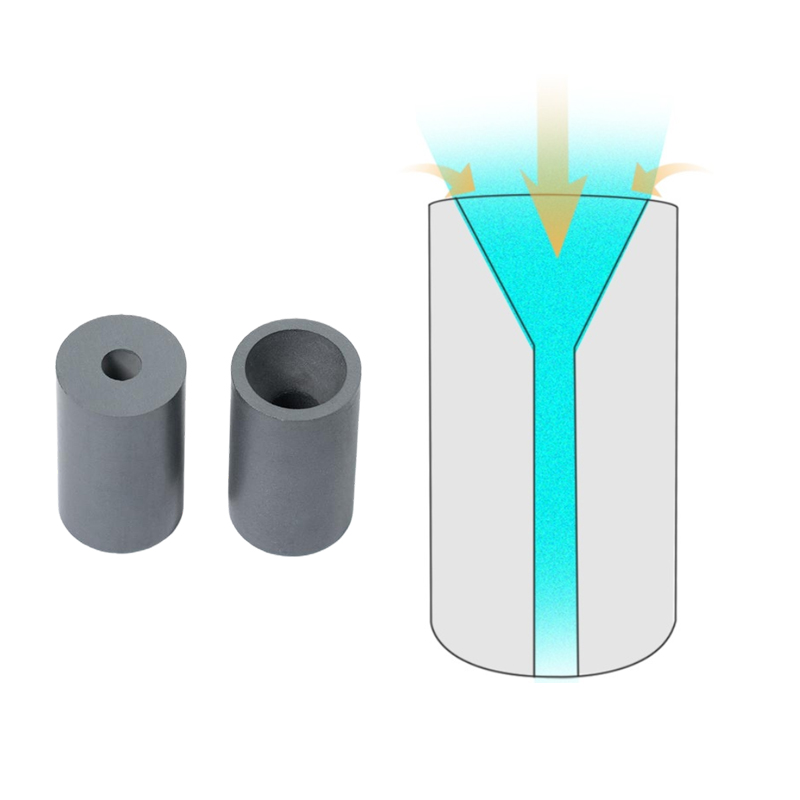
The Contenders: Material Profiles
To understand how these materials combat wear, we must first look at their underlying metallurgy.
1. Hardened Steel Nozzles
Hardened steel nozzles are typically manufactured from carbon steel alloys that have undergone a rigorous heat-treatment process (such as quenching and tempering) or surface treatments (like nitriding) to significantly boost their surface hardness.
The Strength: Excellent structural integrity and impact toughness. They resist chipping and cracking even under sudden mechanical stress.
The Vulnerability: While much harder than standard steel, the underlying iron-based matrix is still susceptible to gradual micro-scratching and chemical degradation when constantly exposed to highly aggressive, sharp abrasives.
2. Tungsten carbide nozzles
Tungsten carbide (WC) is not a simple metal; it is a specialized cermet—a composite material consisting of hard carbide particles bonded together by a metallic binder (usually cobalt or nickel).
The Strength: Exceptional, near-diamond hardness. Tungsten carbide boasts incredible resistance to sliding abrasion, erosion, and high-temperature deformation.
The Vulnerability: High hardness inherently comes with brittleness. It is more sensitive to severe mechanical impacts or sudden thermal shocks than hardened steel.
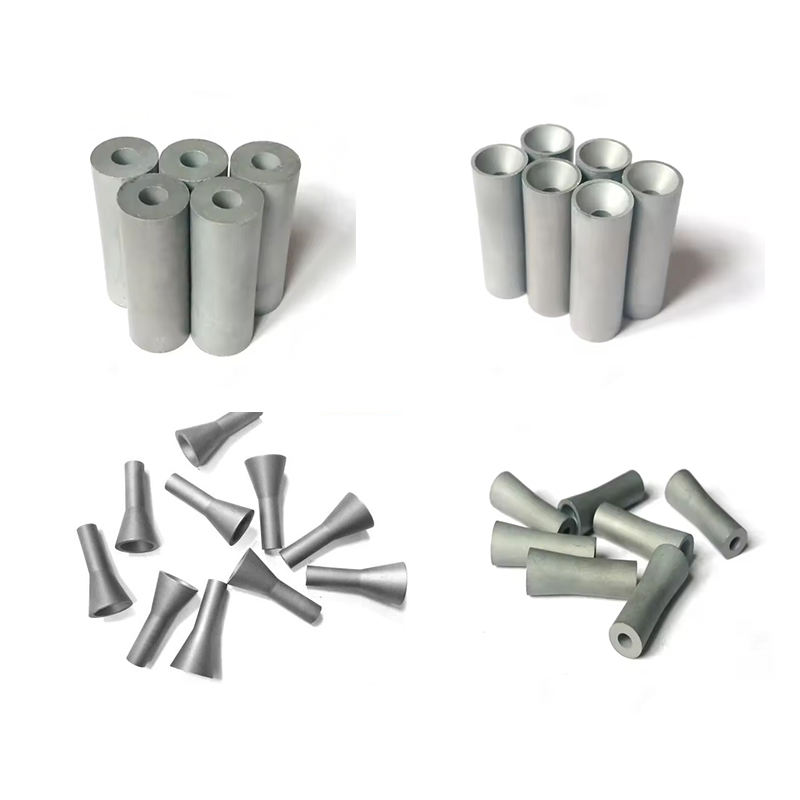
Head-to-Head Performance Comparison
To evaluate which material conquers wear most effectively, we need to analyze how they perform across critical operational metrics:
1. Wear Resistance & Lifespan
When it comes to pure abrasive wear resistance, Tungsten Carbide is the definitive winner.In industrial blasting or highly filled filament extrusion, a tungsten carbide nozzle can outlast a hardened steel nozzle by a factor of 5x to 10x, depending on the exact material grade and binder content. Hardened steel will eventually see its internal orifice erode, leading to wider tolerances and compromised precision. Tungsten carbide maintains its precise geometric dimensions for hundreds of hours of continuous operation.
2. Thermal Conductivity
In applications involving heated fluids or molten polymers, thermal performance directly impacts consistency and throughput.
Tungsten Carbide: Offers excellent thermal conductivity (often 2 to 3 times higher than hardened steel). It heats up fast and maintains a uniform temperature profile.
Hardened Steel: Acts as a thermal insulator compared to copper or carbide. It requires operators to bump up process temperatures to compensate for the slower heat transfer, which can sometimes lead to uneven material flow or degradation.
3. Impact Toughness & Durability
If your operation involves heavy mechanical vibrations, potential collisions, or sudden pressure spikes, Hardened Steel takes the round.Because tungsten carbide relies on a sintered matrix, a sharp, violent blow can cause micro-fracturing or catastrophic chipping. Hardened steel possesses the structural elasticity to absorb mechanical shocks without shattering.
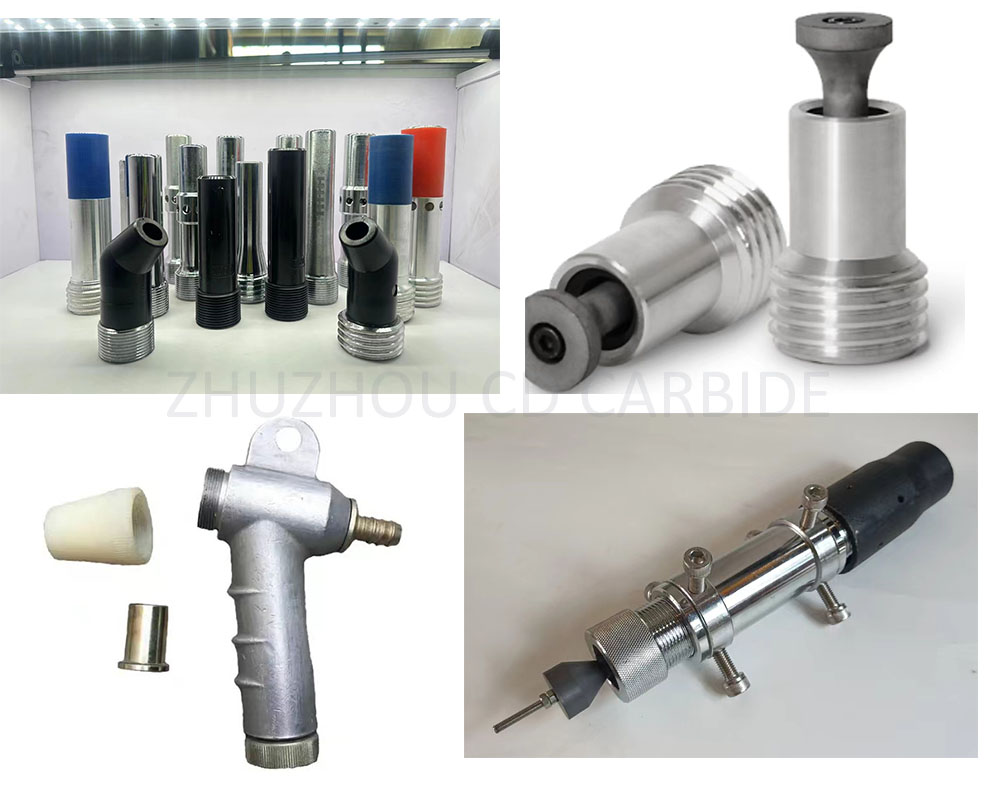
Technical Comparison Matrix
Performance Metric | Hardened Steel Nozzles | Tungsten Carbide Nozzles | Winner |
Surface Hardness | High (Approx. 55-65 HRC) | Extremely High (Approx. 1500-2200 HV) | Tungsten Carbide |
Abrasive Wear Defeat | Good (Excellent budget choice) | Outstanding (Maximum lifetime) | Tungsten Carbide |
Thermal Conductivity | Low | High | Tungsten Carbide |
Impact / Shock Resistance | Excellent (Resists chipping) | Moderate (Prone to brittle fracture) | Hardened Steel |
Initial Capital Cost | Budget-Friendly | Premium | Hardened Steel |
The Verdict: Which Defeats Wear Best?
If your primary objective is to defeat wear completely and maintain long-term dimensional accuracy under continuous abrasion, Tungsten Carbide is the undisputed champion. It drastically reduces downtime caused by frequent nozzle replacements, ensuring a consistent flow rate and a lower total cost of ownership (TCO) over extended production runs.
However, Hardened Steel remains a highly capable and cost-effective alternative if your operations are intermittent, require high impact resistance, or operate under tight upfront budget constraints where the premium cost of carbide cannot be immediately justified.
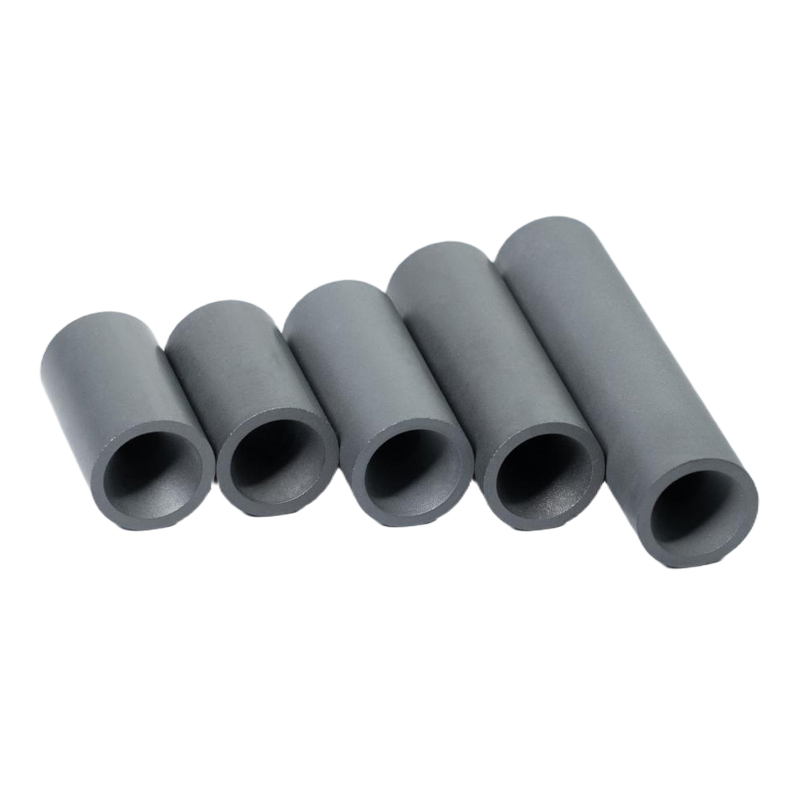
Stop Replacing, Start Optimizing.
Upgrade your industrial wear resistance with our field-proven Tungsten Carbide solutions. Whether you need standard sizes or precision-customized drawings, we ensure consistent quality and competitive factory-direct pricing.
[Send an Inquiry Now] to get a free material consultation and price list within 24 hours!
RELATED NEWS

Zhuzhou Chuangde Cemented Carbide Co., Ltd
Add215, building 1, International Students Pioneer Park, Taishan Road, Tianyuan District, Zhuzhou City
SEND US MAIL
COPYRIGHT :Zhuzhou Chuangde Cemented Carbide Co., Ltd
Sitemap
XML
Privacy policy