


02
2026
-
07
Industrial Carbide Blade Selection Guide: How to Choose the Right Grade Based on Processing Materials
I. Introduction
In the modern industrial slitting and cutting sector, processing plants frequently face severe challenges: high-speed production lines, heavy-duty cutting tasks, and expensive downtime costs caused by the frequent replacement of traditional steel blades. As the ultimate choice for industrial cutting, tungsten carbide blades—leveraging the extreme wear resistance of 100% virginal raw material—have been widely adopted for shearing raw materials ranging from light-duty paper to heavy-duty industrial metals.
However, in industrial slitting, there is no "one-size-fits-all" universal grade. Selecting a cemented carbide grade that perfectly matches the physical properties of your processed material is the true secret to maximizing blade lifespan and lowering comprehensive manufacturing costs.
II. Core Principle: The Physical Metrics Defining Industrial Blade Performance
When selecting a grade for industrial carbide blades, the core objective is finding the perfect balance between hardness (wear resistance) and toughness (impact resistance).
Tungsten carbide consists primarily of a hard tungsten carbide phase and a cobalt binder phase. Generally, the rule of thumb is:
Lower Cobalt Content & Finer Grain Size: Yields higher hardness and extreme wear resistance but increases brittleness. This is ideal for light-load, high-abrasion continuous slitting.
Higher Cobalt Content & Coarser Grain Size: Provides superior impact toughness and excellent resistance to chipping, though wear lifespan is slightly compromised. This is perfect for heavy-duty cutting involving intermittent shock or impurities.
III. Application Blueprint: Matching Carbide Blade Types & Grades with Materials
1. Soft, Fibrous & Multi-layer Film Materials
Typical Applications: Paper slitting, corrugated cardboard cutting, woven bag and fiber cutting, adhesive tape slitting.
Processing Pain Points: During continuous high-speed cutting, blade edges easily dull due to micro-wear, resulting in burrs, stringing, or uneven cross-sections on the product.
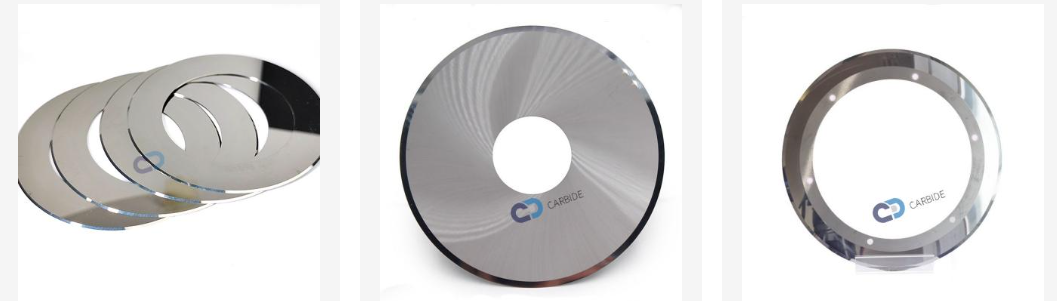
Blade Selection & Grades: We highly recommend double-beveled tungsten carbide machine knives or ultra-thin tungsten carbide slitting saws & circular blades. The preferred grades are YG6, YG8, or fine-grained K10 and K20. Utilizing a lower cobalt content achieves maximum hardness and extreme sharpness. Since these materials carry low impact loads, the blade can deliver a wear lifespan multiple times longer than steel knives.
2. Natural Wood, Composite Boards & Woodworking Heavy-Duty Cutting
Typical Applications: Log sawing, Medium-Density Fiberboard (MDF) slicing, solid wood, and bamboo processing.
Processing Pain Points: Wood has inconsistent density and often contains hard wood knots or composite resins/glues. This creates cyclically fluctuating impact forces that cause traditional steel knives to wear out rapidly or suffer catastrophic chipping.
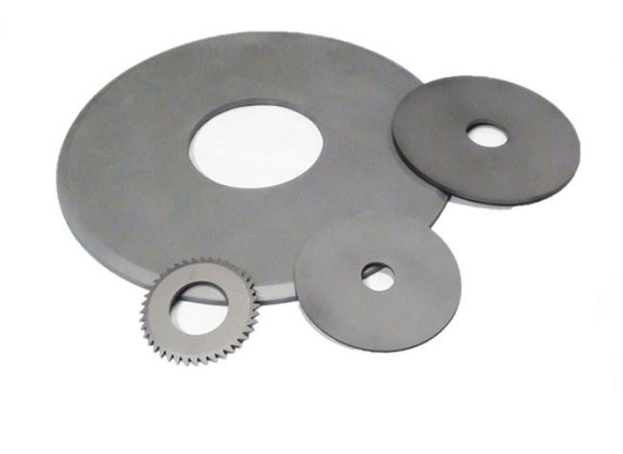
Blade Selection & Grades: We recommend large-diameter Carbide Saw tips integrated into tungsten carbide circular saw blades. The generally recommended grades are YG8 or K30 with medium grain sizes and superior toughness. While maintaining exceptional red hardness, these grades improve impact resistance to prevent macro-chipping when hitting wood knots at high speeds.
3. Polymers, Recycled Waste & Highly Abrasive Materials
Typical Applications: Plastic line cutting, rubber trimming, recycled plastics crushing, and plastic pelletizing.
Processing Pain Points: Recycled plastics or scrap materials often contain trace metal or sand impurities, which exert massive localized shock on the cutting edge. Furthermore, fiberglass composites possess intense abrasiveness that can instantly shatter standard edges.
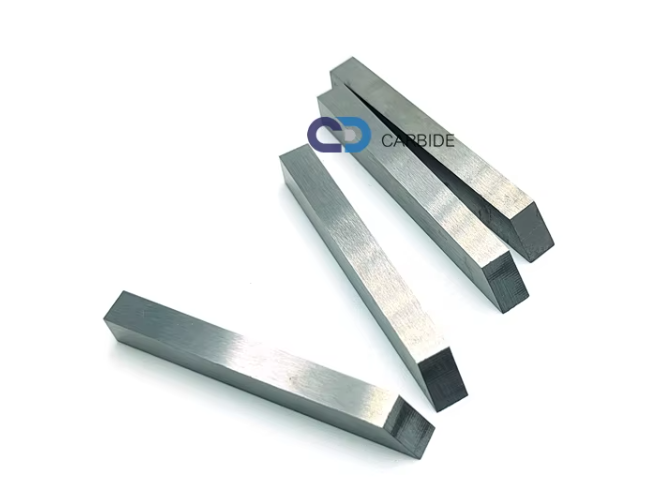
Blade Selection & Grades: High-thickness, high-impact customized tungsten carbide knife blades or specialized shredder knives are recommended. Selection should lean toward "high toughness" by using medium-to-high cobalt grades like YG8, YG11, or K30. For extreme industrial cleaning and material scraping, you can directly deploy carbide strip scraper blades to resist heavy particle abrasion with optimal mechanical strength.
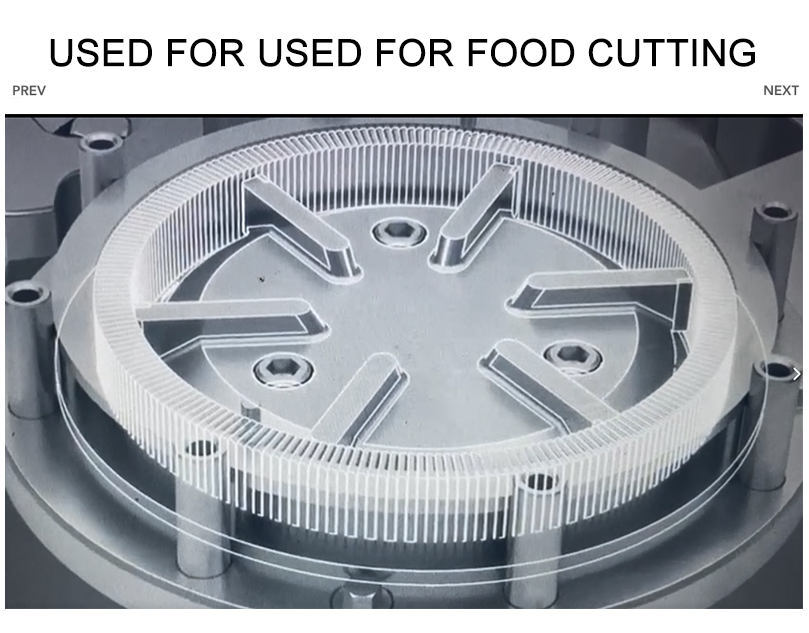
4. Food Processing & Agricultural Product Shredding
Typical Applications: Dried chili cutting machine shredder knives, meat slicing, and frozen food processing.
Processing Pain Points: Blades must comply with food safety standards while enduring continuous micro-impacts from chili seeds or animal bones. The blade must remain incredibly sharp to prevent "juicing and spoiling" while resisting high-frequency impacts.
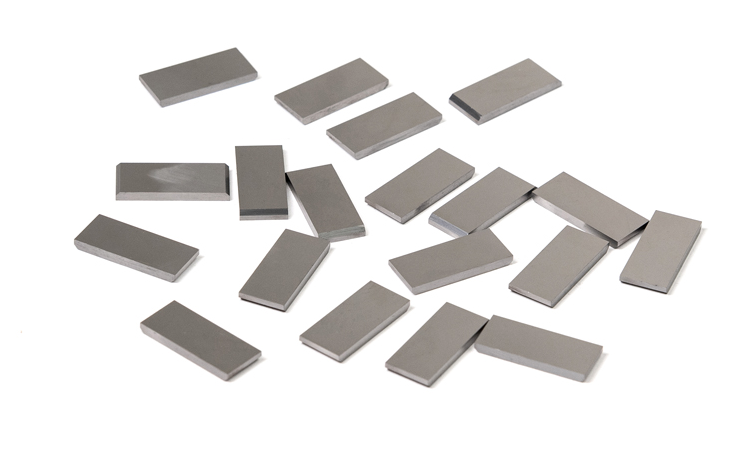
Blade Selection & Grades: Food-grade customized high quality tungsten carbide knife blades are highly recommended. Opt for YG8 or K20/K30, which provide an excellent balance between impact resistance and wear durability, ensuring the edge does not flake under high-frequency slicing.
5. Non-ferrous Metals & Industrial Metal Slotting
Typical Applications: Copper tube cutting, aluminum profile slitting, and thin steel strip slotting.
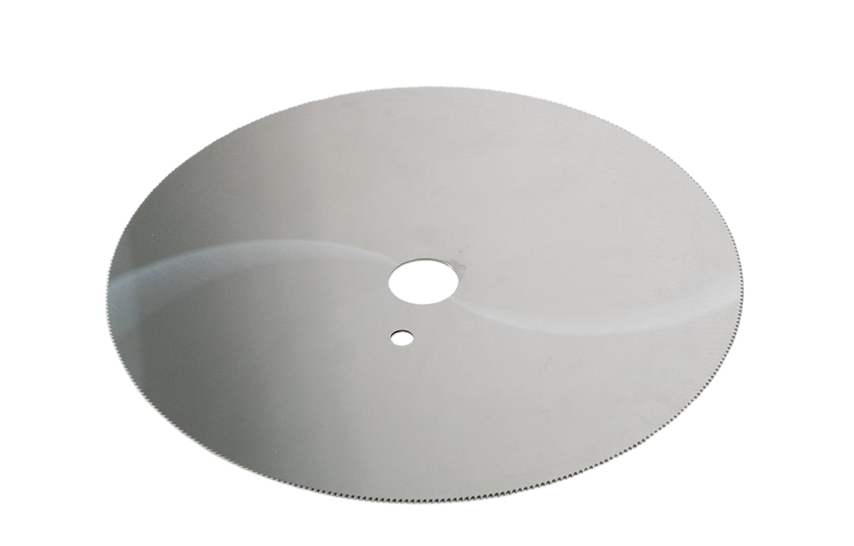
Processing Pain Points: Metal cutting demands extreme shear strength. The severe friction generates intense heat, making the blade prone to Built-Up Edge (BUE), which requires the blade to possess outstanding red hardness and anti-sticking properties.
Blade Selection & Grades: High-precision circular blades for industrial metal slotting are the premium choice. Grades with exceptional thermal shock resistance and wear performance, such as YG6X, YG8, or ultra-fine grain K10, are strongly recommended to ensure the edge geometry remains stable under intense metal shearing.
IV. Selection Matrix: Processing Materials vs. Carbide Grades
Processing Materials | Recommended Blade Types | Recommended Carbide Grades | Core Performance Focus |
Paper / Film / Fiber | Machine Knives / Slitting Saws | YG6, K10, K20 | Ultimate hardness, extreme sharpness, extended anti-wear lifespan. |
Natural Wood / MDF | Circular Saw Blades | YG8, K30 | Impact toughness, high red hardness, macro-chipping prevention. |
Plastics / Rubber / Recycled Materials | Customized Cutter Blades | YG8, YG11, K30 | Impurity impact resistance, balanced wear resistance and strength. |
Dried Chili / Food Processing | Shredder Knives / Knife Blades | YG8, K20 | Edge stability, continuous high-frequency slicing without flaking. |
Copper / Aluminum / Metal Strip | Slitting Saws & Circular Blades | YG6X, YG8, K10 | High red hardness, anti-sticking properties, extreme shear strength. |
Conveyor Material Cleaning | Carbide Strip Scraper Blades | YG11, YG15 | Ultimate shock toughness, heavy particle abrasive wear resistance. |
V. Two Common Mistakes in Industrial Carbide Blade Selection
Mistake 1: Blindly pursuing "absolute hardness" while ignoring shock toughness
Many procurement managers assume that higher hardness always equals a better blade. However, when cutting wood, contaminated plastics, or performing interrupted metal cutting, an excessively brittle blade will suffer early chipping and premature failure upon impact.
Mistake 2: Ignoring specific operating conditions and blindly using off-the-shelf standards
Different cutting machinery speeds and varying thicknesses of processed materials dictate entirely different cutting edge angles and thicknesses. For specialized slitting operations, investing in customized tungsten carbide blades tailored to your exact parameters delivers a far higher Return on Investment (ROI) than forcing standard stock items to fit.
VI. Conclusion & Customization Support
Perfect industrial slitting is not about sourcing the most expensive blade on the market, but about identifying the precise match where the grade and blade design align seamlessly with your specific working conditions. As a leading manufacturer in the cemented carbide industry, Zhuzhou Chuangde Cemented Carbide Co., Ltd is dedicated to using 100% virginal raw materials to supply a full portfolio of products, from high-precision tungsten carbide blades to various non-standard parts. We provide total OEM/ODM customization based on your blueprints and industrial parameters, helping your production lines reduce costs and boost efficiency.
RELATED NEWS

Zhuzhou Chuangde Cemented Carbide Co., Ltd
Add215, building 1, International Students Pioneer Park, Taishan Road, Tianyuan District, Zhuzhou City
SEND US MAIL
COPYRIGHT :Zhuzhou Chuangde Cemented Carbide Co., Ltd
Sitemap
XML
Privacy policy