


21
2025
-
11
Carbide Jaw Inserts: Iimodeli, usetyenziso kunye nesiKhokelo sokuKhetha
Carbide Jaw Inserts: Iimodeli, usetyenziso kunye nesiKhokelo sokuKhetha
Ukufakwa kwemihlathi yeCarbide zizinto ezibalulekileyo zokunganxibi ezisetyenziswa ekubambeni, ukubamba, kunye neenkqubo zokubeka. Ngombulelo kubunzima babo obubalaseleyo, ukuqina, kunye nokuchasana nokuguqulwa, baqinisekisa ukusebenza okuzinzileyo kunye nokuphucula ukuchaneka komatshini kuwo wonke amashishini ahlukeneyo.
1. Iimodeli eziqhelekileyo
Nangona uyilo luhluka phakathi kwabavelisi, uninzi lokufakwa kwemihlathi ye-carbide luwela kwiindidi ezininzi ezisetyenziswa ngokubanzi:
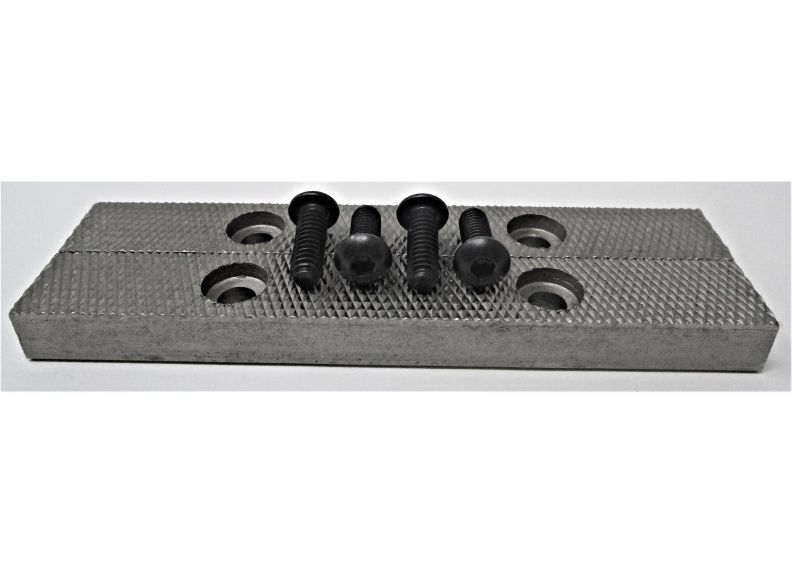
• Ufakelo lweMihlathi eSerrated
Ezi zifakelo zinamazinyo arhabaxa okanye acolekileyo kumphezulu wokwandisa ukukhuhlana nokubamba amandla.
Ukusetyenziswa okuqhelekileyo:ukusetyenzwa kwesinyithi, izixhobo ze-oyile kunye negesi, izixhobo zokuphatha umbhobho, kunye neenkqubo zokubamba ezinzima.
• Ukufakwa kwemihlathi egudileyo
Imigangatho ecaba, engenamazinyo eyenzelwe ukukhusela i-workpiece kwimikrwelo okanye kwi-deformation.
Ukusetyenziswa okuqhelekileyo:iimoto kunye neendawo ze-aerospace, ukuchaneka kwe-machining, kunye namalungu ajongana nomphezulu.

• Ukufakwa kwemihlathi emise okwe-V
Ilungiselelwe ngokukodwa ukubamba imivalo engqukuva, iintonga, imibhobho, kunye namalungu e-tubular.
Ukusetyenziswa okuqhelekileyo:izixhobo zokulungisa, izixhobo zokulungisa, iinkqubo zokuxhasa ukubhola.
• Ufakelo olulungiselelweyo
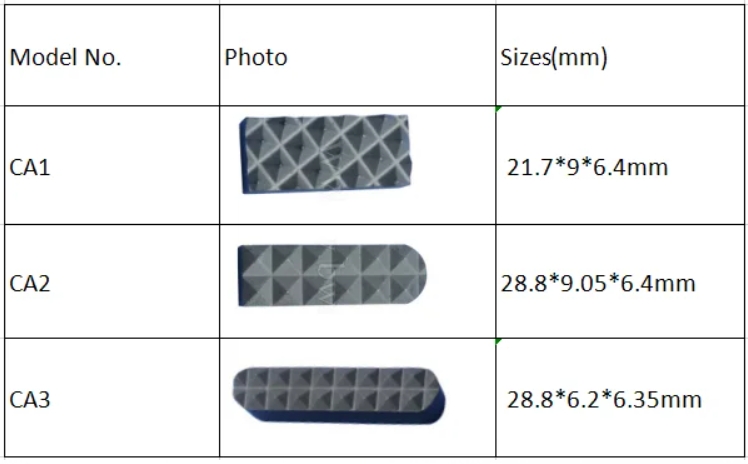
Iveliswe ngokusekelwe kwimizobo ethile okanye iimfuno zezixhobo, ezifana nokufakwa kwamazinyo abanzi, ukufakwa kwempembelelo ephezulu, okanye ukuyila kokumelana nobushushu.
Ukusetyenziswa okuqhelekileyo:izixhobo ezikhethekileyo zokubambelela, imihlathi yokwemba, i-robotic grippers, izixhobo zomthwalo ophezulu.
2. Izicelo
Ukufakwa kwemihlathi yeCarbide kusetyenziswa kakhulu kwimizi-mveliso efuna ukubamba okuqinileyo, okuzinzileyo kunye nokuphindaphindayo:
• Umatshini & nezixhobo
I-lathe chucks, izixhobo zokusila, ii-clamps zokugaya-ukuqinisekisa ukuma okuthembekileyo kunye nokunciphisa ukutyibilika.
• Ishishini le-oyile negesi
Isetyenziselwa ukubamba imibhobho ye-drill, i-tubing, kunye nezixhobo zokuhla, apho i-torque ephezulu kunye nokumelana nokungcangcazela kubalulekile.
• I-Auto & Aerospace
I-clamping yecandelo elichanekileyo apho ukhuseleko lomphezulu kunye nokuzinza okuphezulu kubaluleke ngokulinganayo.
• IiRobhothi kunye noKuzenzekela
Ifakwe kwiziphumo zokugqibela zerobhothi kunye neendawo zokusebenza ezizenzekelayo ezifuna ubomi obude benkonzo kunye nokuphindaphinda okuphezulu.
• ULondolozo kunye neZixhobo zoMsebenzi oMnzi
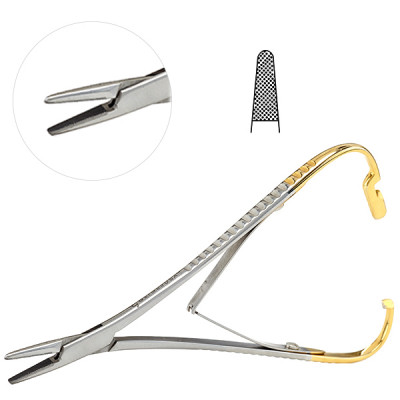
Izitshixo zemibhobho, iipliers zokubamba, kunye nezixhobo zokulungisa umzi-mveliso ukwandisa amandla okubamba kunye nokuqina.
3. Isikhokelo soKhetho
Ukukhetha i-carbide jaw echanekileyo, qwalasela indawo yokusebenza, amandla okubamba afunekayo, kunye nohlobo lomsebenzi.
① IBanga leMathiriyeli
Amabakala e-carbide aqhelekileyo abandakanyaYG6, YG8, YG10, kwayeYG15.
YG6: ubunzima obuphezulu, ukuxhathisa ukunxiba okugqwesileyo; ilungele iimeko zempembelelo ephantsi.
YG8 / YG10: ubunzima obulinganayo kunye nokuqina.
YG15: ukuchasana kwempembelelo ephezulu; ilungele ukungcangcazela okuphezulu okanye izicelo zomthwalo onzima.
② Ubume kunye neSakhiwo soMphezulu
I-Serratedukukhuhlana okukhulu kunye nokubamba
Mhleukukhusela imiphezulu eethe-ethe
V-uhloboukwenzela ukukhusela i-workpieces ejikelezayo
Izinyo elibanzi okanye izinyo elihlekuxhomekeke kumandla okubamba afunekayo kunye nokuzinza kwesicelo
③ Iimeko zokusebenza
Iingqwalasela eziphambili ziquka:
Ngaba kukho impembelelo ephezulu okanye ukungcangcazela?
Ngaba isicelo sibandakanya ubushushu obuphezulu?
Ngaba kukho ukuthambisa (i-oyile, into yokupholisa)?
Ngaba i-workpiece ithanda ukutyibilika?
Ezi zinto zimisela zombini ibakala lemathiriyeli kunye noyilo olufanelekileyo lwesakhiwo.
4. Isiphelo
Ukufakwa komhlathi weCarbide kunokuba zizinto ezincinci, kodwa zidlala indima ebalulekileyo ekusebenzeni kwezixhobo ngokubanzi. Ukukhetha imodeli efanelekileyo kunye nebakala kuqinisekisa ukuqina okuzinzile, kunciphisa ixesha lokuphumla, kwaye kuphucula kakhulu ukusebenza kakuhle kunye nobomi besixhobo.
Iindaba ezinxulumene noko

Zhuzhou Chuangde Cemented Carbide Co., Ltd
Yongeza215, isakhiwo 1, Abafundi beZizwe ngezizwe Pioneer Park, Taishan Road, Tianyuan District, Zhuzhou City
Thumela i-imeyile
Ilungelo lokushicilela :Zhuzhou Chuangde Cemented Carbide Co., Ltd
Sitemap
XML
Privacy policy